The Benefits of Animal-Assisted Therapy in Memory Care
Families often begin with a broad search for assisted living near me, then realize they need something more specific. Once dementia starts affecting communication, comfort, or daily routines, the conversation shifts away from general support and toward memory loss itself.
That is where memory care becomes a different kind of decision. Animal-assisted therapy is not a cure, and it is not the whole story of good dementia support, but the right interaction with a calm, well-managed animal can help a day feel less stressful, more familiar, and more connected.
5 Benefits Of Animal-Assisted Therapy In Memory Care
The Alzheimer’s Association notes that animal therapy has been shown to improve mood, support social interaction, and have a calming effect for people living with dementia. For families, that matters because many of the hardest parts of memory loss show up in moments of distress, withdrawal, or difficulty connecting with others.
A National Library of Medicine review summary also found that animal-assisted therapy shows promise as a psychosocial intervention for people with dementia, though the research base is still limited. That is a useful way to think about it during your search. A therapy animal does not need to transform every symptom to be valuable. Helping someone feel more at ease, more willing to engage, or more open to a pleasant moment can still make a real difference, especially when those moments happen regularly over time.
1. A Calming Effect During Stressful Moments
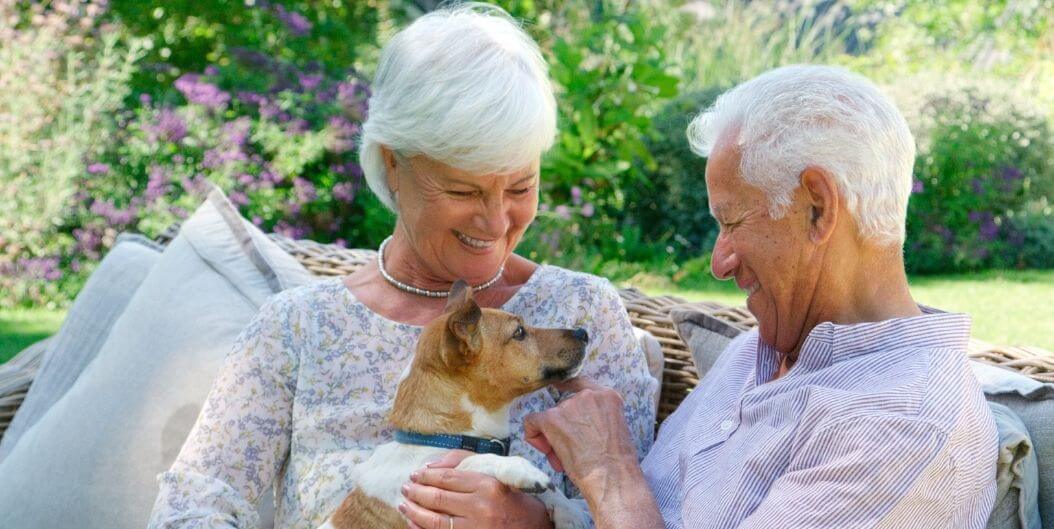
A calm animal can give residents something gentle to focus on when the day feels confusing or overwhelming. Petting a dog, sitting near an animal, or watching a familiar therapy visit unfold can help create a quieter moment in the middle of a difficult routine.
2. Improved Mood
Positive animal interactions may help residents smile, relax, or show more interest in what is happening around them. Even a brief pleasant response can matter in memory care, especially when it gives a resident a chance to experience comfort without pressure.
3. More Social Interaction
Animal-assisted therapy can make conversation feel easier because the animal gives residents, staff, and family members something natural to respond to together. A resident may talk about a pet they once had, comment on the animal, or engage with others in a way that feels less formal than a planned activity.
4. Gentle Sensory Engagement
The texture of fur, the rhythm of petting an animal, and the quiet movement of a therapy dog can all offer sensory input that feels familiar and manageable. For some residents, that kind of gentle engagement may be easier to process than louder or more crowded activities.
5. A More Familiar, Resident-Centered Activity
Many older adults have meaningful memories connected to pets or animals. Animal-assisted therapy can draw on that familiarity in a way that feels personal, especially when staff pay attention to each resident’s comfort level, preferences, and response.
What Families May Notice During A Session
Some residents may smile more, speak more, or stay present for longer stretches of time during a positive animal interaction. Others may simply seem calmer while petting a dog or sitting near an animal in a quiet room. Small changes like that can matter in memory care because they can make daily routines feel less overwhelming.
Not every resident will respond in the same way, and that is part of the point. Good memory care does not treat animal-assisted therapy like a performance. It treats it like one possible avenue for comfort. A thoughtful session leaves room for choice, watches for signs of stress, and recognizes that familiarity, personality, fear, or sensory overload can all shape how someone responds in the moment.
That is why staff observation matters during animal-assisted therapy. A resident who becomes more talkative, reaches out to pet the animal, relaxes their posture, or seems more settled afterward may be showing signs that the interaction is meaningful. A resident who turns away, appears tense, or seems overstimulated may need more space, a shorter visit, or a different kind of activity.
How To Evaluate Animal-Assisted Therapy In A Memory Care Community
Animal-assisted therapy tends to work best when it is part of a broader rhythm of support rather than a one-time novelty. A strong program gives residents chances for calm engagement throughout the day, with staff guidance, familiar routines, and a pace that does not feel forced. During a tour, pay attention to how the community introduces stimulation. You are looking for choice, patience, and a sense that activities are adapted to the resident instead of pushing the resident to adapt to the activity.
A useful question is not simply, “Do you offer animal-assisted therapy?” A better question is how the program fits into the wider approach to memory care. Ask how often it happens, what safety steps are in place, how staff respond if someone feels unsure, and how the team decides which kinds of engagement fit each person best.
Thoughtful answers usually reveal far more than a simple yes or no ever could. You are trying to understand not just if animals visit, but whether the community knows how to use that experience in a safe, resident-centered, and respectful way.
Looking For a Safe and Secure Memory Care Community in Marietta? Visit Elison Assisted Living & Memory Care Of Marietta In Person
Families can explore the community overview and see how its assisted living and memory care programs are designed around changing needs. Elison Assisted Living & Memory Care of Marietta offers private apartments, individualized care, resident life activities, and a memory care program with activities, therapies, round-the-clock care, and the dining with G.R.A.C.E. program.
If your search for memory care near me for your loved one has led you to deeper questions about memory loss, a personal visit can help you see what daily life really feels like. Schedule a tour to know more about our memory care program, observe the environment, and decide whether its approach to comfort, engagement, and routine feels right for your senior loved one.